 Pr3cise
Articles · Cost estimating
Seven Ways to Ruin a Construction Project (and How a Real Estimate Stops Each One)
No job dies in one hit. Construction project failure is cumulative, and most of it is decided at the estimate. Seven ways to get there, with the data behind each, and the control that cuts it.
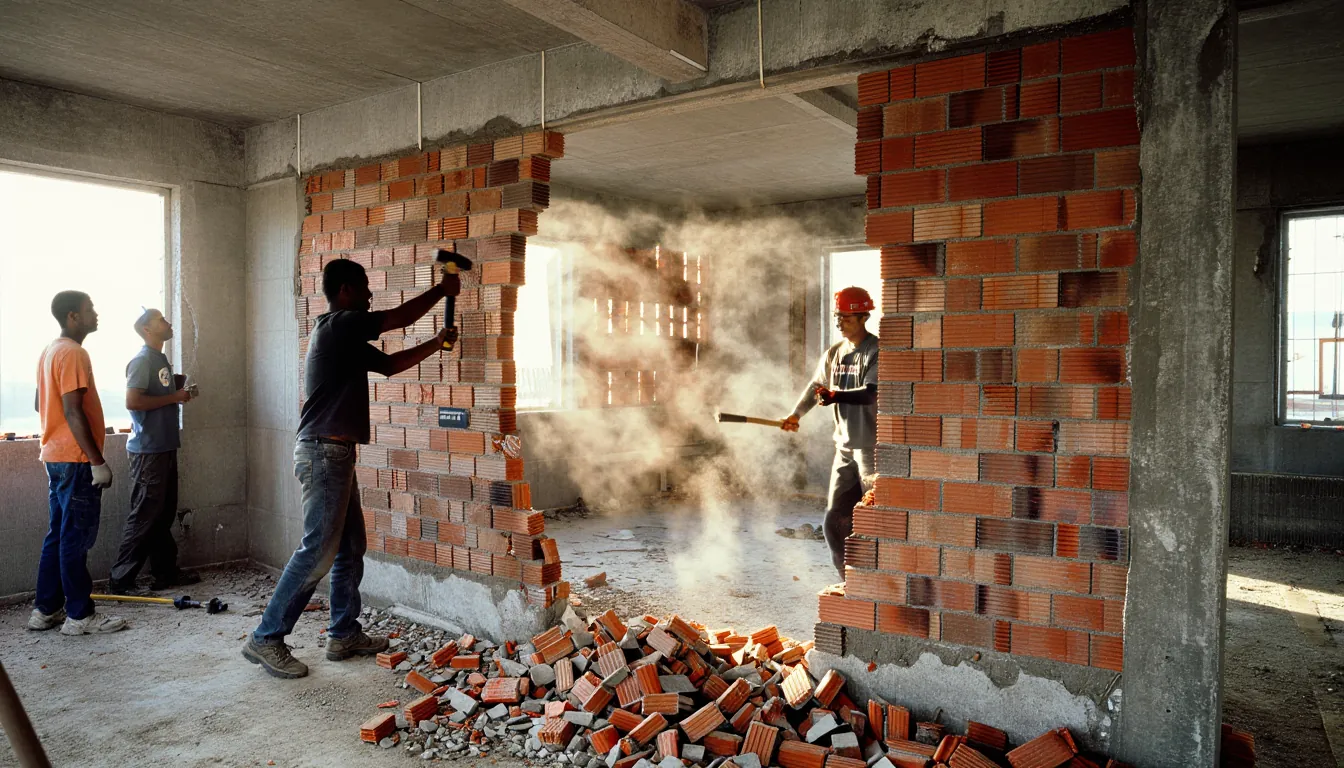
Almost no job dies in one hit. Construction project failure is cumulative: a takeoff done by eye, a number bought too cheap, last year's pricing, a change built before anyone priced it. By the time it's visible, the contract is signed and the subs are bought out.
Here are seven ways to ruin a construction project, all of them estimating decisions made before mobilization, with the data behind each one and the control that cuts it. What happens afterward, once none of them were cut, is in the risks of an inaccurate construction estimate. The examples lean toward Miami-Dade and South Florida, because the code down there punishes a generic estimate faster than almost anywhere else.
1. Bidding a permit set nobody took off
The most common way to ruin a job is to treat the documents as complete and jump straight to pricing. They rarely are. In the Arcadis 2025 disputes report, errors and omissions in contract documents were again the number one cause of construction disputes in North America.
In South Florida the gaps are specific. Most of the region sits in the High-Velocity Hurricane Zone, and the HVHZ provisions of the Florida Building Code drive quantities that a generic national assembly won't carry: impact-rated openings, roof attachment and secondary water barriers, corrosion-resistant fasteners, uplift connections. If the assembly you priced has no Miami-Dade Notice of Acceptance or Florida Product Approval valid for the HVHZ, it won't clear plan review, and the substitute almost never costs the same.
The question isn't whether the documents have gaps. They do. The question is whether you found them at the desk or you'll find them with a crane on site.
2. Buying the job
The second way is winning with a number below what the work costs and planning to make it back on change orders. The research says the house wins that bet. In a study of highway paving contracts, Bajari, Houghton and Tadelis (2014) estimated that adapting incomplete contracts after award costs 7.5% to 14% of the winning bid, far more than bidders make on markups.
The owner's side isn't better. In Italian public works, Decarolis (2014) found at least half the savings from awarding at the lowest price were lost to renegotiation afterward. Screening out abnormally low bids prevented the performance problems, but cut the initial savings by a third. A low number is not a price. It's a forecast of an argument.
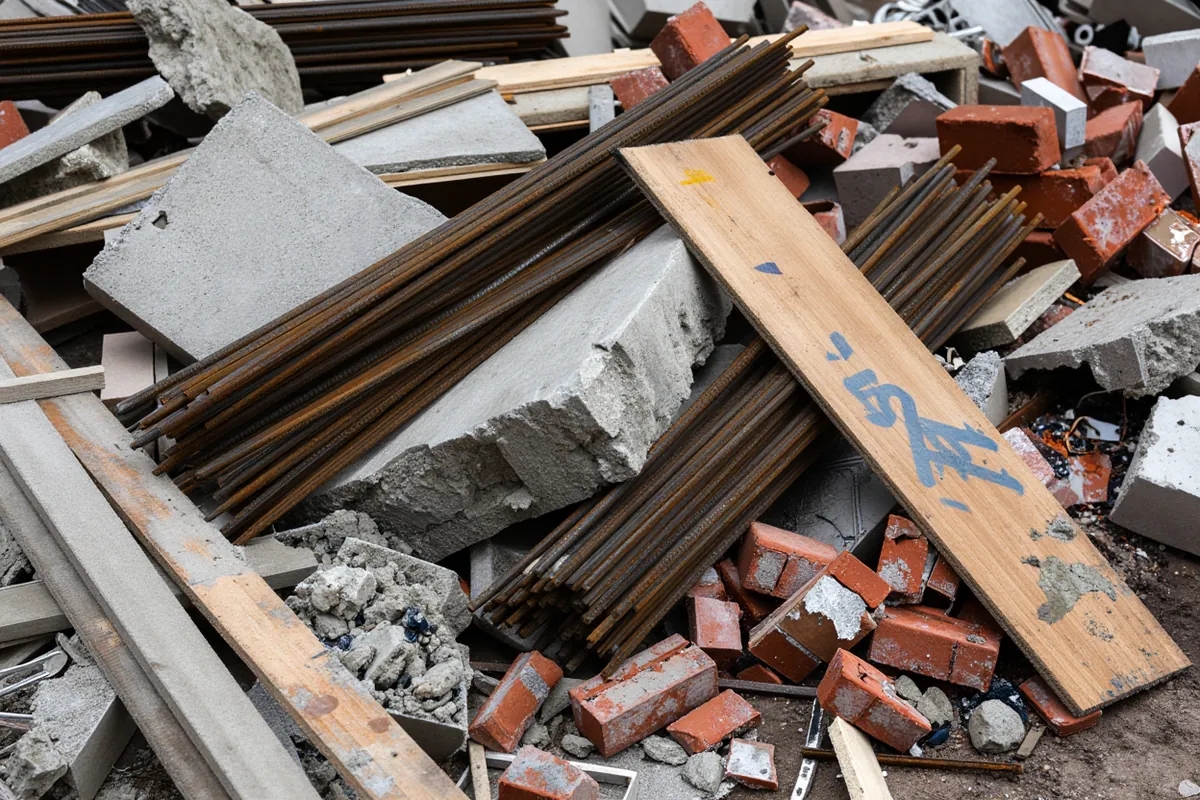
3. Pricing this year's job with last year's numbers
The third way doesn't hurt on bid day. It hurts at buyout. AGC chief economist Ken Simonson reported that US nonresidential construction input prices rose 39% between February 2020 and February 2024, nearly double the 20% rise in consumer prices over the same period.
The squeeze didn't end there. According to the AGC (2026), input prices for new nonresidential construction rose 7.1% between June 2025 and June 2026 while contractors' bid prices rose only 3.5%, roughly half as much. That gap doesn't evaporate. Somebody's margin absorbs it, and on a fixed-price contract that somebody is the contractor.
Protecting against it isn't about predicting the market. It's about dating your pricing, stating how long the proposal is good for, and splitting material from labor in the buildup so an escalation conversation has something to stand on. An undated lump sum with no buildup can't be defended to an owner, a supplier or an arbitrator.
4. Leaving the seams between trades open
The fourth way is assuming every scope has an owner. Equipment pads, fire-rated penetrations and firestopping, roof curbs, backing for supports, trenching and backfill for underground utilities: each of these sits on a line between two subcontracts, and each one gets left out of both when nobody reconciles the takeoffs. Arcadis found that 56% of survey respondents named supply chain disruption, price escalation, labor shortages and delays as key sources of conflict in 2024, and a scope gap turns each of those pressures into a dispute.
The fix is boring and it works: take off each trade separately, then reconcile the boundaries. That's how we price concrete and masonry, electrical, plumbing and fire protection, and then check the seams in a combined MEP estimate.
5. Treating change orders as paperwork
The fifth way is building first and pricing later. A change costs what it costs, but an unpriced change also costs the disruption it causes. Working from a database of 226 projects, Ibbs (2012) measured average change of 8% and found roughly 40% of projects ran more than 10% change. When change stayed at 5%, labor productivity beat plan on 60% of projects; once it passed 20%, productivity never reached the planned rate at all.
6. Paying for the same work twice
The sixth way is the quietest, because rework never shows up as a line item. Love (2002), surveying 161 Australian construction projects, found rework accounted for 52% of cost growth. Using data from 359 CII projects, Hwang and colleagues (2009) put the direct cost of field rework alone at about 5% of total construction cost.
That 5% is the floor. The UK's Get It Right Initiative, counting unrecorded waste, latent defects and indirect costs, estimates errors cost between 10% and 25% of project cost, around seven times the UK industry's annual profit.
Rework also never gets billed twice. The line gets put in place once on the schedule of values even when the crew built it twice, so it never appears in a cost report. It shows up at closeout, when there's nothing left to negotiate with.
7. Letting a disagreement become a claim
The seventh way is what happens when there's no margin left to negotiate with. Arcadis reports the average North American construction dispute was worth $60.1 million in 2024, up from $43.0 million in 2023, and took 12.5 months to resolve. That average is pulled up by a handful of mega-claims: 80% of claims were $25 million or less and almost half were under $5 million, which is the range most contractors actually live in.
Globally, HKA (2025) found that across more than 2,200 projects in 114 countries, sums in dispute averaged 33.4% of contract budgets and contractors' extension-of-time claims averaged 65.8% of the planned schedule. At that point nobody is building. Everybody is documenting.
How each one gets prevented
All seven have the same antidote, and it isn't working faster in the field. It's closing the number before you sign.
| Way to ruin the job | Early warning sign | Control |
|---|---|---|
| Bidding a set nobody took off | Allowances where quantities should be | Complete takeoff traceable to the drawings, priced to HVHZ assemblies |
| Buying the job | A bid well below the rest of the list | Know your cost before you decide how thin to go |
| Stale pricing | Unit costs with no date and no buildup | Current market pricing, dated |
| Open seams between trades | Two subs both assuming the other carries it | Trade-by-trade takeoff plus a reconciliation of the boundaries |
| Unpriced changes | Verbal direction in the field | Price and approve every change before it's built |
| Rework | Repeated layout and leftover material | Checked quantities and coordinated trades |
| Claims | RFIs going unanswered | Document scope and pricing from day one |
Contingency belongs in that list too, and it has to be a defensible number rather than whatever is left over. The U.S. General Services Administration applies 7% construction contingency on new capital construction and 10% on repair and alteration work, noting it should reflect each project's risk. The UK Treasury's optimism bias guidance starts far higher at outline stage, up to 24% for standard buildings and 51% for non-standard buildings including refurbishments, and only lets that uplift fall toward 2-6% as specific risks are identified and managed. You shrink contingency by measuring, not by deleting it.
How we work
Pr3cise is a remote estimating office preparing cost estimates and quantity takeoffs for GCs, specialty contractors, developers and architects, including teams building in Miami-Dade and the rest of South Florida. Send the plans and you get a line-item estimate with unit-cost buildups and current pricing in Excel and PDF, typically in 24 to 72 hours. The estimating and takeoff service is priced per trade or per project, and the local scope is on our Miami construction estimating page. You can see the output format in our sample estimates.
The same argument from the other side is in how construction cost estimating saves money. If you have a bid due, request an estimate.
Frequently asked questions
Treating the documents as complete and pricing them as-is. In the Arcadis 2025 disputes report, errors and omissions in contract documents were again the number one cause of construction disputes in North America. In South Florida the gaps are specific: HVHZ assemblies, roof attachment, impact-rated openings and product approval. If what you priced has no Miami-Dade Notice of Acceptance or Florida Product Approval valid for the HVHZ, the substitution after plan review is yours to absorb.
The research says no. Bajari, Houghton and Tadelis (2014) estimated that adapting incomplete contracts after award costs 7.5% to 14% of the winning bid, far more than bidders make on markups. Decarolis (2014) found at least half the savings from awarding public works at the lowest price were lost to renegotiation afterward. A low number doesn't remove cost, it defers it and adds interest in the form of disruption and disputes.
More than most contractors budget for. Arcadis reports the average North American construction dispute was worth $60.1 million in 2024 and took 12.5 months to resolve, though 80% of claims were $25 million or less and almost half were under $5 million. Globally, HKA (2025) found sums in dispute averaged 33.4% of contract budgets across more than 2,200 projects, with extension-of-time claims averaging 65.8% of the planned schedule.