 Pr3cise
Articles · Cost estimating
The Risks of an Inaccurate Construction Estimate: Who Pays and When
A bad estimate doesn't stay on paper: the GC loses margin, the owner runs short of financing and both end up fighting over change orders and claims. Here's what goes wrong at each phase of the job.
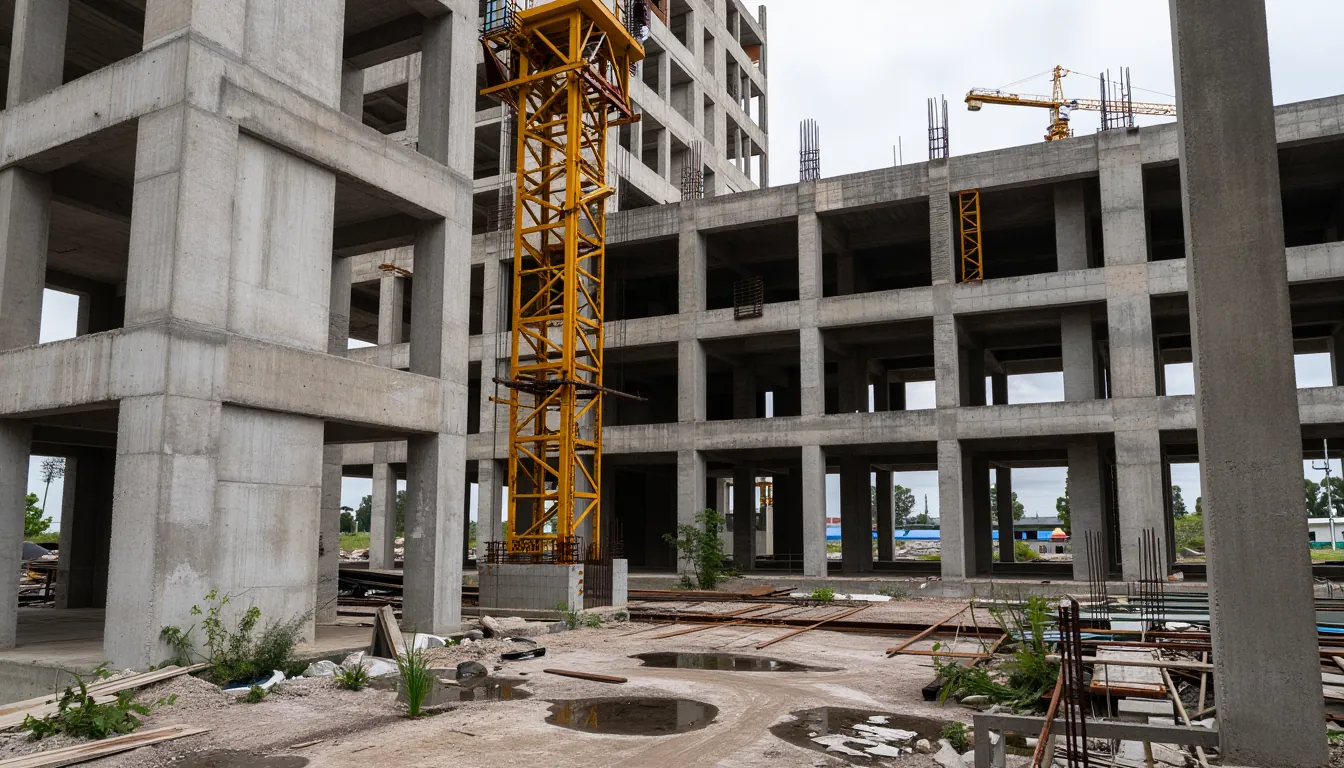
An inaccurate construction estimate rarely hurts on the day you sign. It hurts months later, when a pay app doesn't cover what you've spent, when the lender asks why the job is behind, or when the first scope nobody carried shows up in the field. By then the error isn't a number in a spreadsheet anymore. It's money somebody has to find.
This isn't a rare problem. In a study of 258 transportation infrastructure projects, Flyvbjerg, Holm and Buhl (2002) found that costs were underestimated in almost 9 out of 10 projects, and actual costs averaged 28% above the estimate. Underestimation hadn't improved in 70 years.
This article isn't about the causes; we cover those in the most common ways to ruin a construction project. It's about the consequences: who pays for a bad estimate, at which phase the bill arrives, and why a small miss rarely stays small.
Why an inaccurate construction estimate fails more than once
The estimate sits under almost every decision on a job: the GC's bid, the owner's construction loan, the schedule, the subcontracts and the purchase orders. If that foundation is off, everything built on it inherits the error. That makes the estimate the first risk decision on a project, not paperwork.
Bent Flyvbjerg's database of more than 16,000 large projects across all sectors (not just construction) shows that only 8.5% came in on budget and on time, according to a review of How Big Things Get Done (2023). In KPMG's 2015 global survey of 109 senior leaders at organizations running capital projects, only 31% of their projects landed within 10% of budget over the previous three years.
An estimating error doesn't disappear. It changes hands. If the GC's margin doesn't absorb it, the owner pays through change orders, or both pay through a claim. The only questions are who pays, and when.
For the GC: winning the job that loses money
The winner's curse
When several GCs bid the same job, the low number doesn't always belong to the most efficient builder. Often it belongs to the one who left something out: a scope gap between trades, an outdated material price, a general conditions line nobody carried. Economists call it the winner's curse: you win the job precisely because your estimate was the most optimistic one.
A hypothetical example. You win a $2.4 million commercial build-out carrying 5% net profit after overhead, or $120,000. Your framing and drywall takeoff on a $600,000 scope is 10% short: $60,000 gone. A scope gap between your electrical and low-voltage subs lands on you for another $45,000. The extra work pushes the schedule two weeks, and your general conditions run $10,000 a week: $20,000 more. That's $125,000 in hits against $120,000 of profit. You're paying $5,000 to build the job.
A second set of eyes on the takeoff before bid day, whether in-house or through an outside cost estimating and quantity takeoff service, is the cheapest place to catch that kind of gap.
Margin gone halfway through
The consequences of underbidding rarely show early; the hole opens when the under-measured scopes come up. By then the contract is signed, your subs are bought out and you're left with two bad options: negotiate change orders from a weak position, or cut where you shouldn't, in manpower, quality or schedule.
Stale pricing makes it worse. According to the AGC (2026), input prices for new nonresidential construction rose 7.1% between June 2025 and June 2026, roughly double the 3.5% rise in contractors' bid prices. That suggests contractors were absorbing much of the increase.
Cash flow pressure
Your schedule of values comes from your estimate. If the estimate is short, every pay app bills less than the work actually costs. Say a pay app bills $180,000 for the month and the owner holds 10% retainage, so you receive $162,000 against $215,000 you've already paid out in labor, materials and subs. You're floating $53,000. Two months like that and you're $106,000 out of pocket, most of your profit on the job. That's how a GC that's profitable on paper runs short of cash and starts paying subs late.
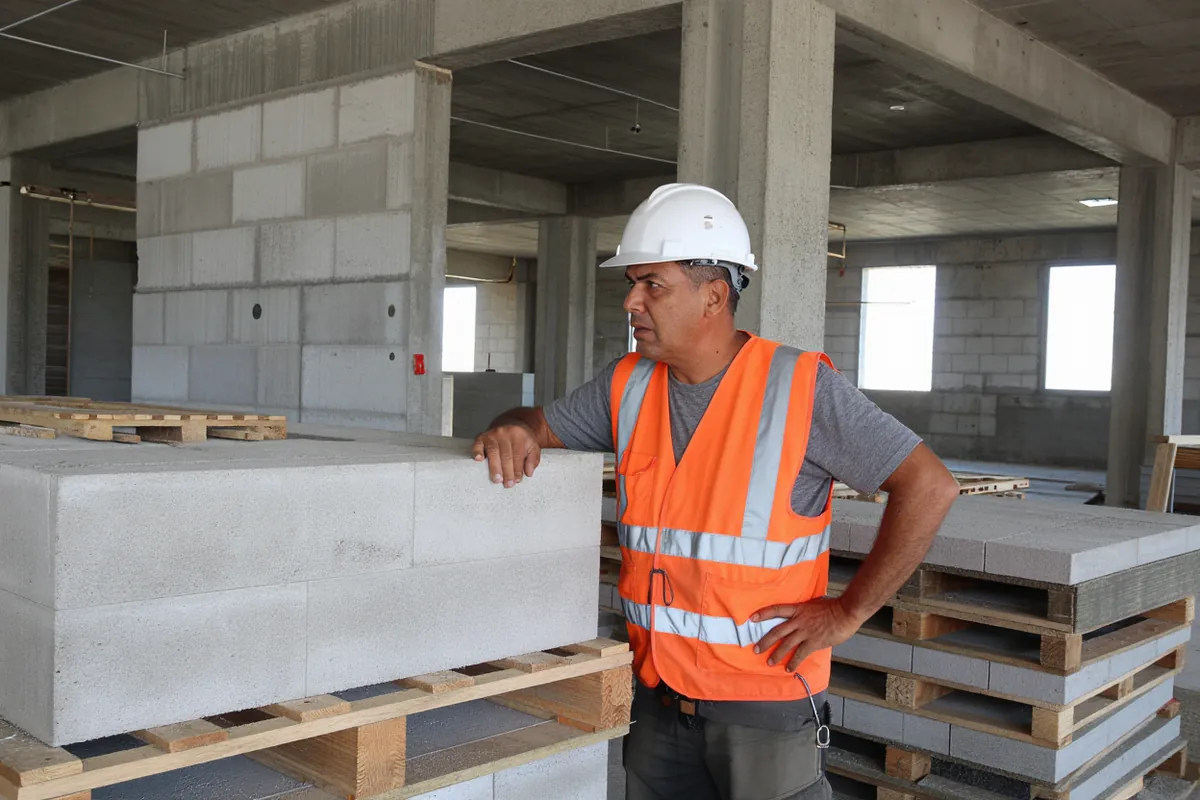
For the owner: financing gaps, stalled work and late delivery
The loan is sized on the wrong number
The construction loan, the equity and the pro forma all start from the estimate. If it's short, the owner finds out mid-job that money is missing and nobody has committed it. A hypothetical example: a developer sizes the loan on a $3 million estimate and the job comes in 12% over. That's $360,000 with no source. The lender has no obligation to increase the loan, so the gap comes out of the owner's equity, a new partner or a refinance on worse terms.
Many construction loans also carry an in-balance requirement: if the undisbursed loan doesn't cover the cost to complete, the owner has to deposit the difference before the next draw is released. Contingency won't rescue a bad estimate either. The U.S. General Services Administration carries 7% contingency on new construction and 10% on repair and alteration work (GSA, 2024). A takeoff that's short by more than that eats the whole cushion before the first unforeseen condition appears. That's why it pays to check the number with independent construction estimating services before you size the loan.
Stalled work and late delivery
When the money stops, the job stops. A stalled job doesn't cost zero: loan interest, builder's risk insurance, equipment rental and site security keep running, and every week of delay pushes back rent or sales revenue. McKinsey (2016) reports that large projects typically take 20% longer than scheduled and can run up to 80% over budget.
There's legal exposure too. If an underbid GC runs out of cash and stops paying subs and suppliers, they can file mechanic's liens against the owner's property, in some states even when the owner has already paid the GC in full.
Contract risk: change orders, claims and disputes
An incomplete estimate doesn't eliminate the cost of what's missing. It defers it. Whatever wasn't carried comes back during construction as a change order, priced mid-job with no competition and the schedule clock running.
In a study of highway paving contracts, Bajari, Houghton and Tadelis (2014) estimated that adapting incomplete contracts after award costs 7.5% to 14% of the winning bid. In Italy, Decarolis (2014) found that at least half the savings from awarding public works at the lowest price were lost to renegotiation afterward.
When negotiation fails, it becomes a claim. Arcadis (2025) reports that errors and omissions in contract documents were again the top cause of construction disputes in North America in 2024. The average North American dispute was worth $60.1 million that year and took 12.5 months to resolve.
That average is pulled up by a few mega-claims: 80% of claims were $25 million or less, and almost half were under $5 million. Globally, HKA (2025) found that sums in dispute averaged 33.4% of contract budgets across more than 2,200 projects in 114 countries.
The domino effect: one bad line item drags down the rest
Almost nothing in an estimate stands alone. If the elevated slab quantities in CSI Division 03 are short, it isn't one line that's wrong. Concrete, rebar, formwork, crane time, the structural schedule and every trade stacked behind it all move, from masonry to MEP rough-in. That's why trade-level takeoffs matter, whether it's concrete and masonry estimating or MEP estimating. A line-item estimate with unit-cost buildups, like the ones in our sample estimates, lets you trace every dollar back to a quantity.
The error also gets paid twice: once in the line item and again in rework. Love (2002) found that rework accounted for 52% of cost growth across 161 Australian projects. Using data from 359 CII projects, Hwang and colleagues (2009) put the direct cost of field rework alone at around 5% of total construction cost.
Change also slows crews down. Working from a database of 226 projects, Ibbs (2012) found that when change stayed at 5% or less, labor productivity beat plan on 60% of projects. Once change passed 20%, productivity never reached the planned rate. An estimate that forces you to redo half the job on the fly doesn't just cost more. It makes every crew less productive.
Who gets hurt, phase by phase
Here's where the bill for a bad estimate usually lands:
| Phase | GC and subs | Owner or developer |
|---|---|---|
| Bid day and award | Wins with a number that's missing scope (winner's curse) | Picks the low bid without knowing it's incomplete |
| Buyout and financing | Locks in sub and supplier prices against short quantities | Sizes the loan and equity on a cost that isn't real |
| Construction | Margin fade, pay apps that don't cover costs, cash crunch | Change orders, stalled work if funds run out, lien exposure |
| Closeout | Claims, disputed final payment, damaged owner relationship | Late delivery, disputes, lost rent or sales revenue |
Reputation, bonding and your next bid
A GC that chases change orders on every job earns a reputation for bidding low and making it up later, and owners and architects remember it when they build the next bid list. If you're paying subs late, the good ones stop sending you numbers and you end up with whoever is available, not whoever you need.
Losses also show up on your work-in-progress schedule, and your surety reads it. Profit fade on a couple of jobs can shrink your bonding capacity, which limits the work you can go after. Owners pay in reputation too: with tenants or buyers waiting on a delivery date, with the lender they'll need for the next project, and with their partners.
How to break the chain before bid day
None of these consequences start in the field. They start at the desk, when an estimate gets approved without a complete takeoff, without unit-cost buildups or with last year's pricing. The cheapest time to fix it is before you bid or close the loan, as we explain in how construction cost estimating saves money.
Pr3cise is a remote estimating office that prepares cost estimates and quantity takeoffs for GCs, remodelers, specialty contractors, developers and architects. Send us your plans, plus your quantities if you have them, and within a few days you get a bid-ready estimate broken down by line item, with unit-cost buildups and current market pricing, in Excel or PDF. If you have a bid or a loan in the works, request an estimate.
Frequently asked questions
Usually the contractor wins the job and is left with three bad options: absorb the loss, cut corners, or chase change orders to recover the gap. None of them ends well. Margins disappear, cash gets tight as pay apps fall behind actual costs, the owner relationship sours, and unpaid subs may file liens that land on the owner's property.
It depends on the contract. Under a lump-sum or stipulated-sum contract, the GC generally eats its own takeoff and pricing errors unless the owner changes the scope. Under unit-price or cost-plus contracts, more of that risk shifts to the owner. Errors in the design documents usually turn into change orders, and fights over who caused what often end up as claims.
It depends on the stage and on how well the scope is defined. In Construction Industry Institute data, building projects with well-defined scope before budget approval finished 2.6% over budget on average, versus 12.9% for poorly defined ones. A conceptual number from early sketches is only a budget check; a bid should rest on a complete takeoff from finished drawings.